Protecting people in warehouse and production environments

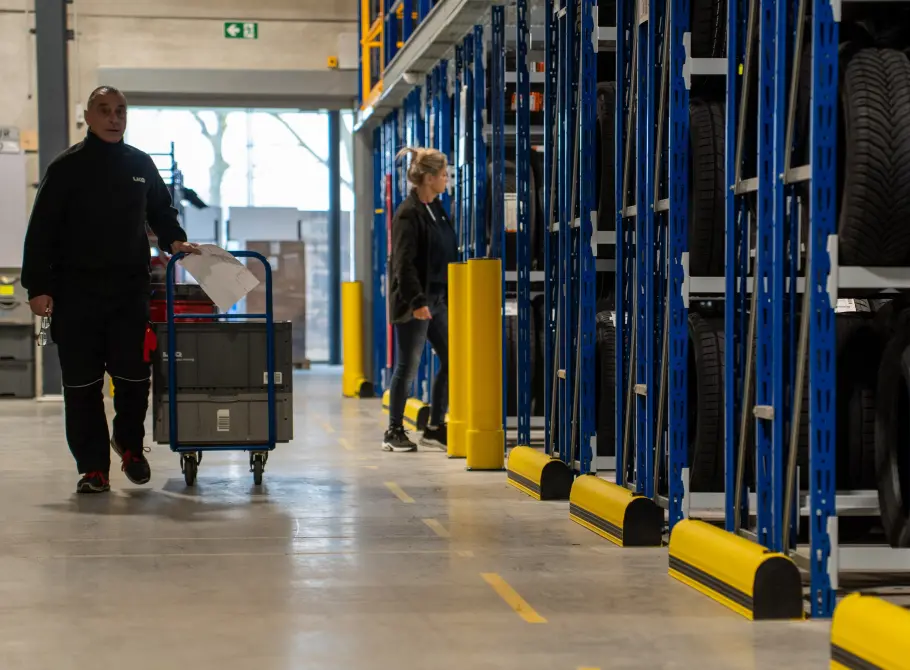
Forklifts, pallet trucks and employees often move through the same space. Risks mainly arise where routes cross, visibility is limited or people have to walk close to internal transport.

Do you want to protect employees more effectively? Then the process does not start with choosing a fence or barrier. First, it must be clear where people and vehicles encounter each other, why the risk occurs there and which measure best suits the situation.

We assess the daily traffic flows and advise on a solution that supports safety without unnecessarily disrupting your warehouse operations.

Where are people at risk in your warehouse?

Where are people at risk in your warehouse?

An employee stepping from a work area into a vehicle route. A pedestrian walkway running directly alongside forklift traffic. A passage where vehicles and pedestrians cross paths. These are everyday situations in which the safety margin can quickly become small.

Intersections, passageways, exits and work areas close to internal transport require particular attention. Changes within a warehouse can also create new risks. A different layout, new machinery or increased traffic can cause people and vehicles to encounter each other in new locations.

That is why it is important to look not only at where employees are supposed to walk according to the plan, but also at how they actually move through the warehouse in practice.

Why is it important to protect people?

Why is it important to protect people?

A collision with a forklift or other mobile work equipment can have serious consequences. That is why it is important to address hazardous traffic situations before an incident or near miss occurs.

A clear layout helps employees and drivers understand where they can move safely. Where pedestrian and vehicle routes come close together, physical separation may be necessary. This reduces the risk of people unexpectedly entering the operating area of internal transport.

So it is not only about protection in the event of a possible collision. A well-organised workplace helps reduce risks earlier in the traffic flow.

Why does the risk occur, and how do you address the cause?

Risk often arises from a combination of layout and daily use. This may include a sharp bend with limited visibility, a narrow passage or a pedestrian route running directly alongside a busy vehicle route.

Installing a barrier is not automatically the best solution. If employees regularly cross at an illogical location, we also look at why this happens. Can the pedestrian route be designed more logically? Is a controlled crossing needed? Can people and vehicles be physically separated more effectively?

This analysis is important because protection should not simply hide the underlying problem. Sometimes impact protection is the right measure. In other cases, part of the solution lies in routing, signage or adjusting the warehouse layout.

Why does the risk occur, and how do you address the cause?
How can you protect people from internal transport?

How can you protect people from internal transport?

The right solution depends on the location and on how people and vehicles move through the area.

Signage and floor markings may be sufficient where routes are clear, visibility is good and enough distance can be maintained between pedestrians and vehicles. They indicate where people and internal transport are expected to move, but they do not physically separate the two traffic flows.

Where pedestrians regularly come close to internal transport, routes intersect or the consequences of an error could be serious, physical protection may be required.

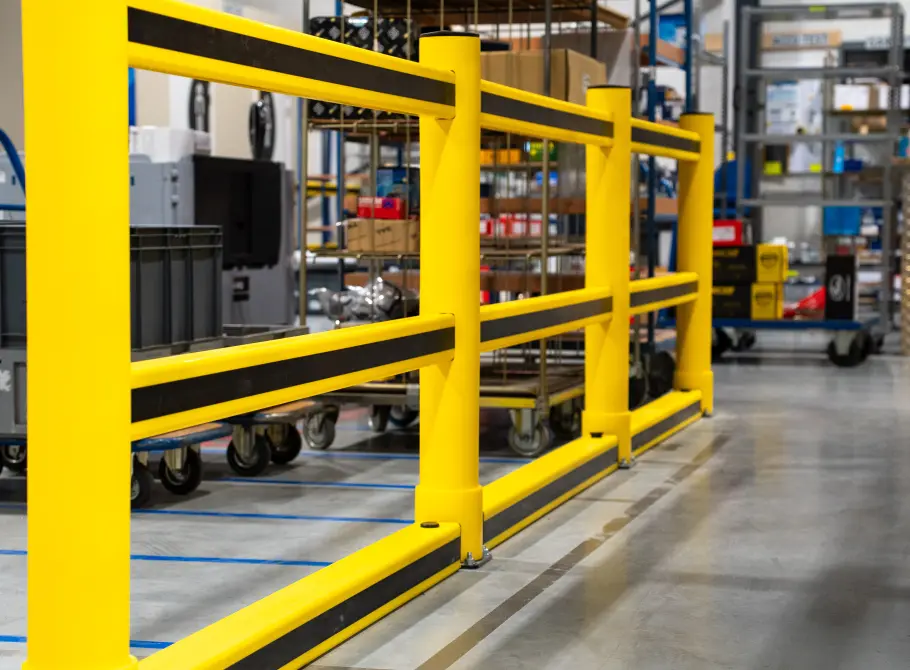
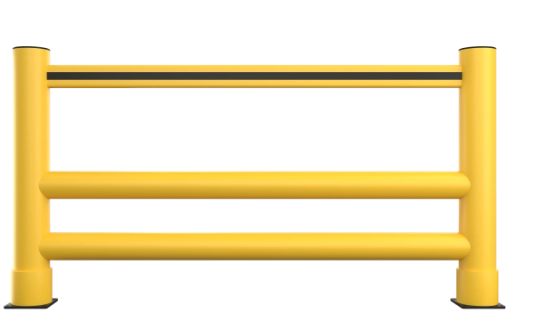
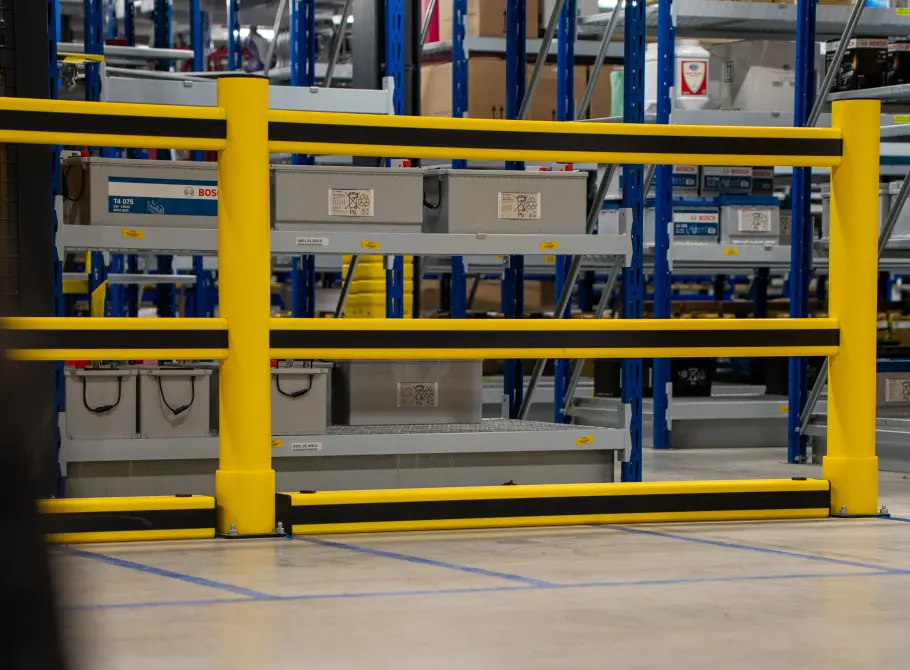
Pedestrian barriers create a physical separation between walkways and areas used by internal transport. They are particularly suitable where employees regularly walk alongside vehicle routes.

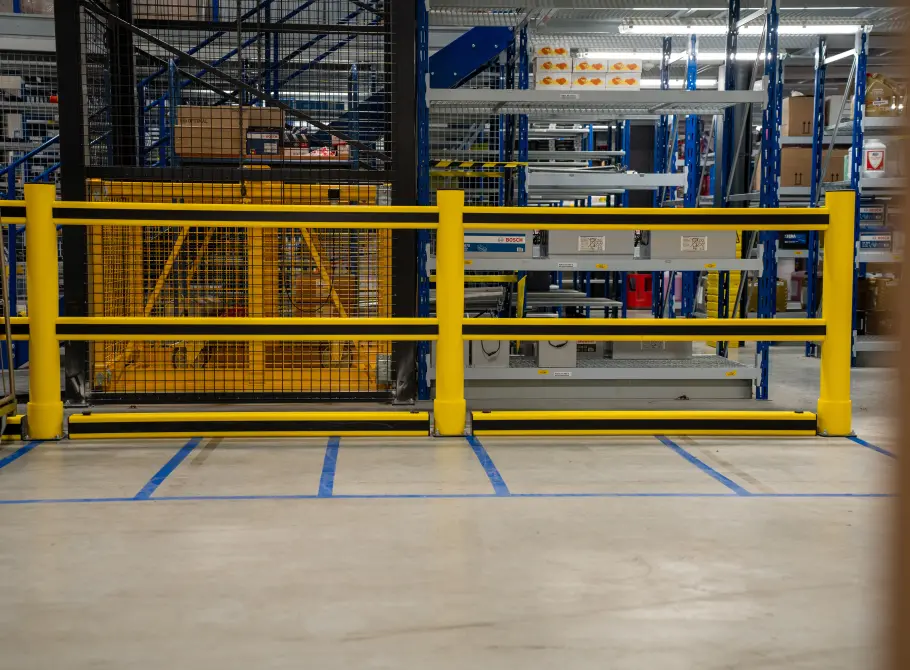
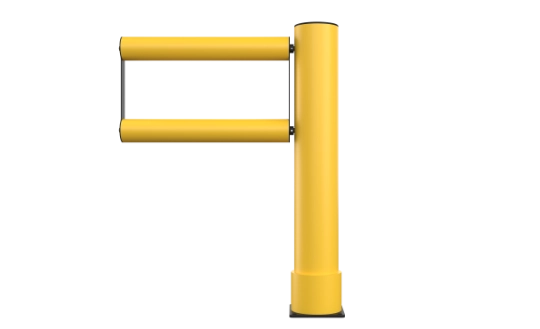
Safety gates can create controlled access at points where employees enter or leave a protected area. They can be used as standalone solutions or connected to existing barriers.

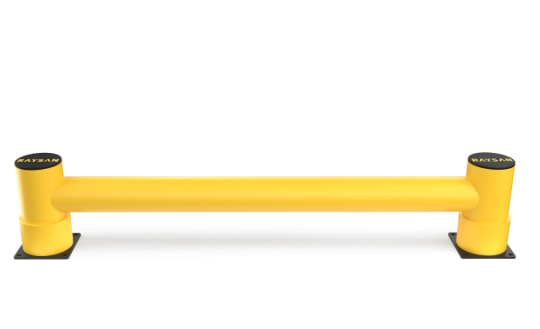
For longer areas, safety barriers and pedestrian barriers can help physically separate pedestrian and vehicle routes over a greater distance.

How do we determine which protection is right for your situation?

How do we determine which protection is right for your situation?

We start by looking at the actual movements within your warehouse. Where do employees walk? Where do vehicles travel? Where do these routes intersect, and how much space is available there?

Based on this, we determine which measure is most appropriate. We then advise on the implementation and can supply and professionally install the selected protection. Our approach to impact protection therefore covers the entire process, from risk assessment and advice to supply and installation.

This helps prevent a solution from fitting technically while creating new bottlenecks in practice.

Which legislation applies to the protection of employees?

Which legislation applies to the protection of employees?

In Belgium, the Well-being Act and the Code on Well-being at Work form the legal basis. Among other things, these rules require safe traffic routes and measures to reduce risks caused by mobile work equipment such as forklifts.

For warehouse and production environments, the rules on safe workplaces and traffic routes are particularly relevant. Traffic routes must be safe to use and, where there is a risk of collision, relevant measures include separating pedestrians and vehicles, maintaining sufficient distance and using physical barriers.

At European level, the Framework Directive 89/391/EEC applies. It requires employers to assess risks, address risks at source where possible and give priority to collective protective measures over individual protection. In addition, Directive 89/654/EEC on workplaces contains specific requirements for traffic routes. Where vehicles and pedestrians use the same environment, sufficient safe clearance must remain for pedestrians and vehicle routes must be clearly marked where necessary.

In practice, this means that you should not only consider visibility and signage, but also assess where physical separation is necessary to keep employees effectively out of the operating area of internal transport. We help identify these risk areas and advise which layout and protective measures are most suitable for your situation.