Protect machines against collisions

A machine does not have to be positioned in the middle of a traffic route to be vulnerable. A protruding corner, control cabinet, conveyor or technical installation may already be within reach of a forklift or pallet truck.

Damage to this type of equipment can go beyond the affected component itself. If an installation is important to your production or logistics process, a single collision can also lead to repair work, delays or downtime.

That is why we do not only look at the machine itself, but also at the surrounding space and traffic movements.

Which machines and installations are at risk?

Which machines and installations are at risk?

Equipment located along traffic routes, corners and manoeuvring areas can be particularly vulnerable. This includes machines that forklifts need to drive around, conveyors positioned next to traffic routes, or technical installations located close to loading and unloading movements.

Smaller components can also present an important risk. Pipes, charging points, control panels and technical cabinets may be within reach of internal transport, even when the machine as a whole appears to have sufficient clearance.

New machines or changes to processes can also alter the situation. An area that previously offered enough space may become a tighter manoeuvring point after an expansion.

Why is it important to protect machines?

For many companies, machine protection is primarily about operational continuity. Damage may require repairs, but it can also affect other activities that depend on the machine or installation.

The consequences can vary greatly depending on the situation. An impact against a protective barrier is very different from damage to a critical technical installation. That is why it is important to identify which equipment must remain operational at all times and where internal transport could come too close.

Targeted impact protection creates physical distance between vehicles and vulnerable equipment and helps prevent a routine manoeuvre from immediately causing damage.

Why is it important to protect machines?
What causes the risk, and is protection alone sufficient?

What causes the risk, and is protection alone sufficient?

The cause does not always lie with the driver. A tight bend, limited manoeuvring space or a traffic route that runs close to equipment reduces the margin for error.

If the same installation is hit repeatedly, this is also a reason to assess the surrounding environment. Does the traffic route still suit the current layout? Has a new machine reduced the available space? Could traffic be redirected?

That is why we first look at why the risk situation occurs. Sometimes physical impact protection is sufficient. In other cases, adjusting the traffic flow or layout can have a greater effect.

How can you protect machines and installations?

How can you protect machines and installations?

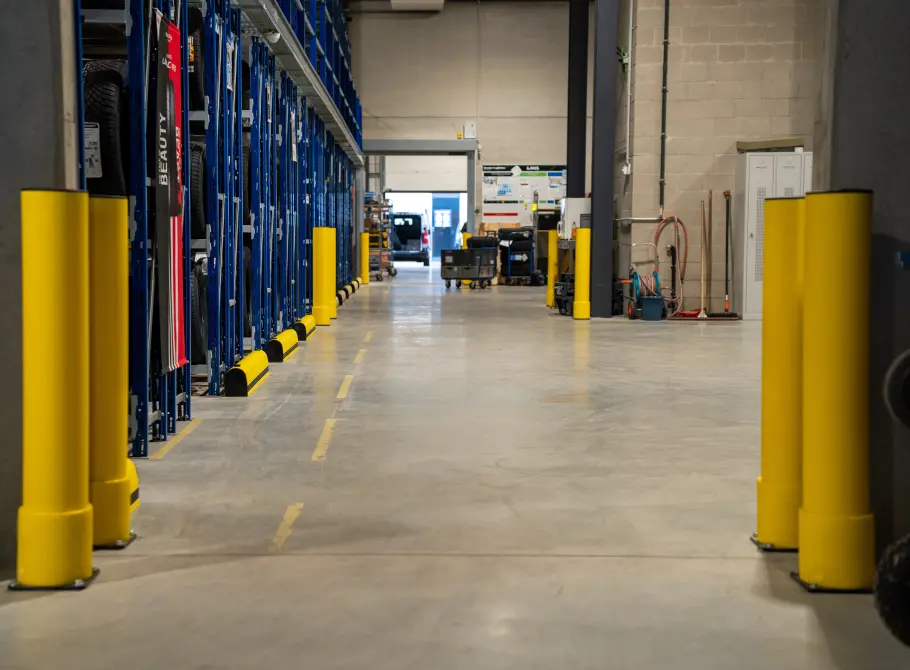
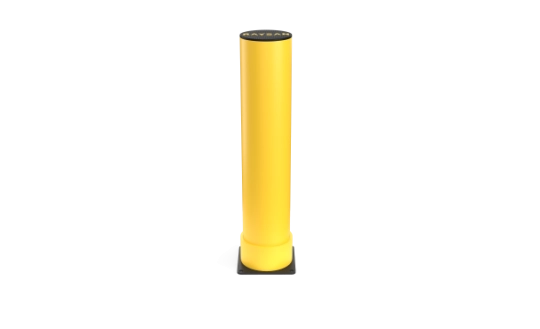
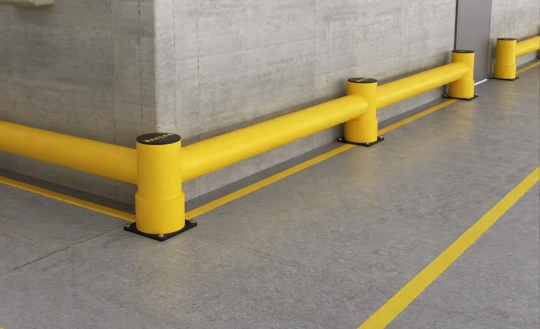
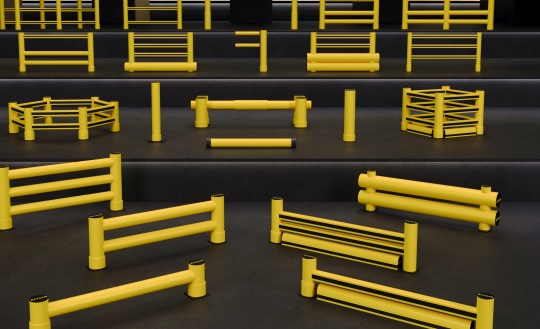
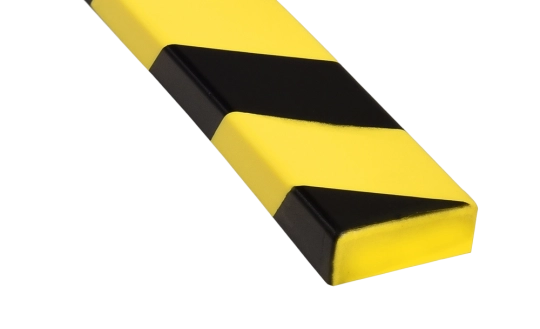
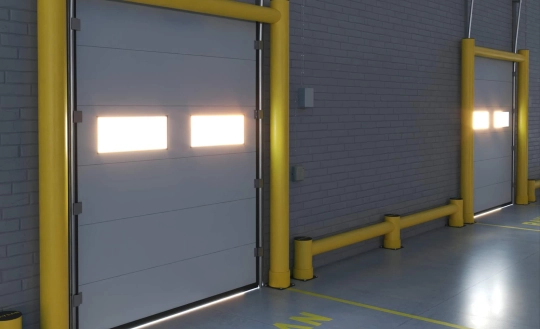
For individual vulnerable points, protective bollards and impact barriers can be used. Column and corner protection helps shield protruding corners and vulnerable areas around machines. Along longer machine sides, conveyors or technical installations, a safety barrier can protect a larger area against impacts from internal transport.

When the main risk is not a vehicle collision, but employees coming into contact with moving or hazardous machine parts, mesh fencing can be used as a physical barrier. This helps prevent people from unintentionally entering a hazardous area while maintaining visibility of the machine.

How do we determine which protection is suitable around your machine?

How do we determine which protection is suitable around your machine?

The dimensions of a machine only tell part of the story. We also look at the direction from which vehicles approach, the available clearance, traffic intensity and the role of the machine within your process.

Accessibility also plays an important role. A protective solution should not unnecessarily obstruct maintenance, operation, inspection or essential access.

That is why we assess not only where protection can technically be installed, but also how employees and technical teams use the machine on a daily basis. This ensures that the solution remains practical while also being tailored to the risk.

We then advise which type of protection is appropriate at each location and can professionally install the solution.

Which legislation applies to machines and internal transport?

Which legislation applies to machines and internal transport?

In Belgium, the Well-being Act and the Code on Well-being at Work apply. Work equipment must be suitable for the work and must be installed, used and maintained in such a way that risks to employees are limited. This also requires taking into account the space around machines and other moving parts in their surroundings.

For forklifts and other forms of internal transport, requirements apply, among other things, to safe use, driver training, visibility and stopping devices. In work areas, appropriate traffic rules must also be established and measures must be taken to reduce the risk of employees being struck by vehicles.

At European level, Directive 2009/104/EC on the use of work equipment is relevant. Among other things, it states that work equipment must be positioned and used in such a way that risks to employees are reduced and that sufficient clearance must be provided around moving parts. The Directive also contains specific requirements for mobile work equipment and forklifts.

In practice, this means that you should not only consider the machine itself, but also the space around it, safe access for operation and maintenance, and the risk of collisions involving internal transport. We help assess these vulnerable areas and advise where physical protection around machines and technical installations is required.