Protect buildings against impact damage

Some parts of a building are located exactly where you would rather not have them. A column in the middle of a manoeuvring area, a gate that forklifts pass through every day, or a wall directly alongside a traffic route.

Relocating them is usually not an option. Protecting them is.

We assess which parts of your building are vulnerable to internal transport, investigate what is causing the risk and advise which measure best suits the daily movements around that location.

Which parts of your building are at risk?

Which parts of your building are at risk?

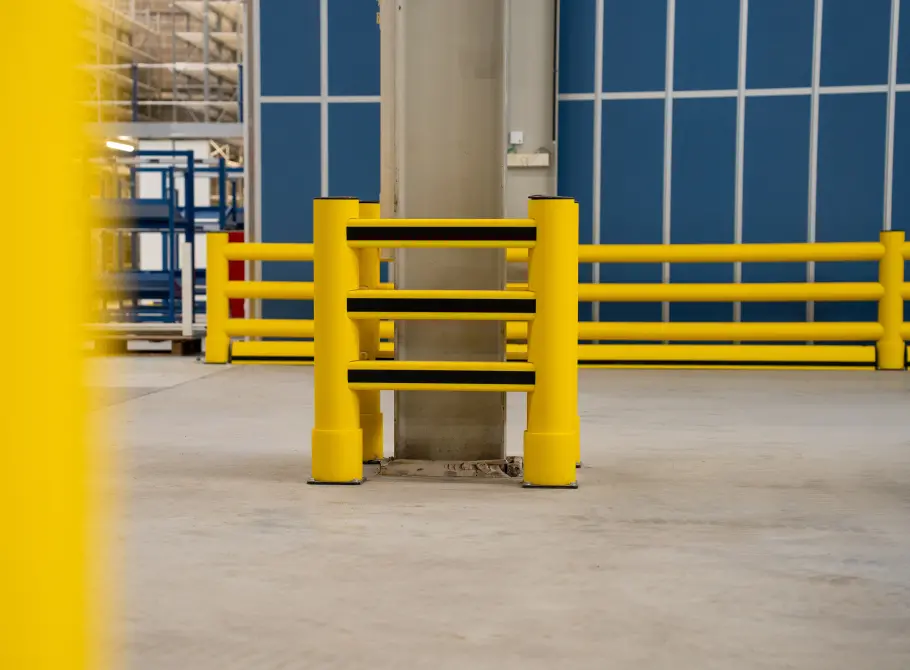
Fixed building elements located along traffic routes require particular attention. Columns, pillars, corners, walls and gates may fall within the turning radius of forklifts or other vehicles.

Risks can also occur above a vehicle. A raised forklift mast or high load may strike a low passage, gate or structural element.

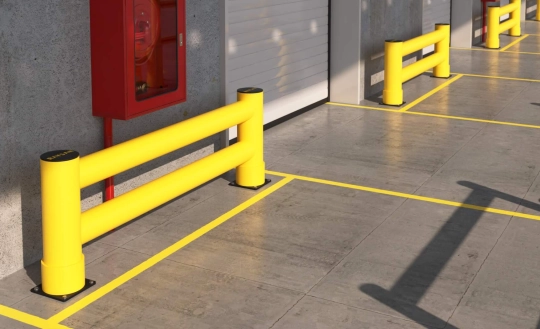
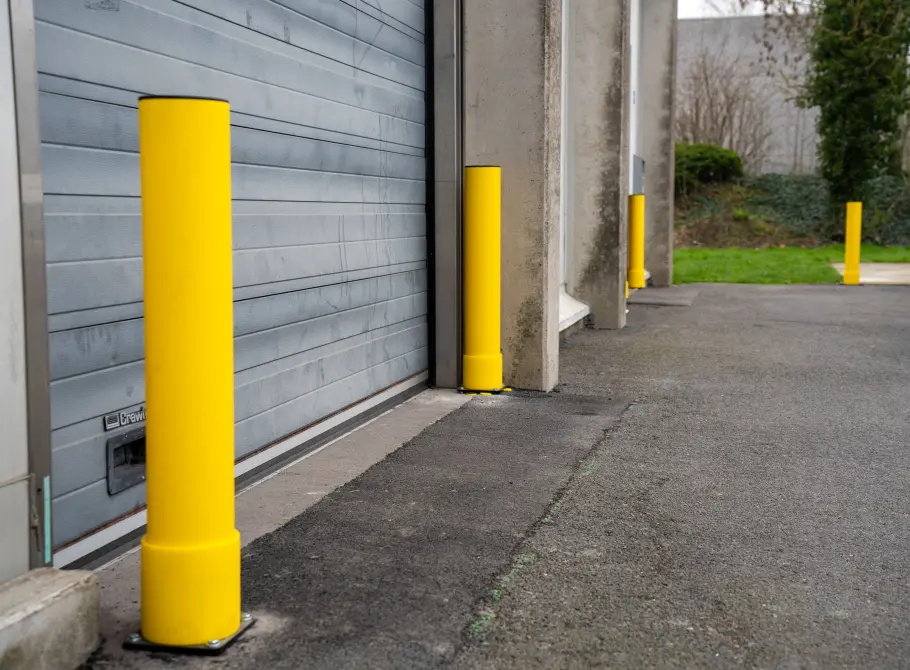
At loading docks and entrances, several traffic movements come together. As a result, different vulnerable elements may be present in the same area.

Existing damage is not the only factor to consider. A changed layout or new traffic route can mean that a column that was previously outside the driving line suddenly falls within the manoeuvring area.
Why is it important to protect buildings?

Why is it important to protect buildings?

Recurring damage to walls, gates or columns leads to repair costs and can disrupt operations in the affected area. However, not every type of damage has the same impact. Superficial damage to a wall is very different from damage to a gate, load-bearing column or technical junction that is important to the operation of the building.

When determining priorities, we therefore consider not only what is visibly damaged, but also the function of the building component and the possible consequences if that function is disrupted.

A damaged gate, for example, can obstruct access. Damage to a load-bearing element requires a different assessment than cosmetic damage to a wall.

Not every part of a building therefore requires the same level of protection. Priority should be given to areas where both the risk of impact and the potential consequences are greatest.

Why does damage keep occurring in the same places?

Why does damage keep occurring in the same places?

Impact damage to buildings is usually not random.

A column located directly after a bend is passed more often than a column outside the main traffic flow. A narrow gate leaves less lateral clearance. With a low passage, the risk is located above the driver’s normal field of vision.

If damage keeps recurring, this often reveals something about the situation. Limited manoeuvring space, changed driving routes or a layout that no longer matches daily operations may be the underlying cause.

That is why we do not only look at the damaged area itself. If a different route, layout or combination of measures offers a more effective long-term solution, this is also included in our advice.

How can you protect your building?

How can you protect your building?

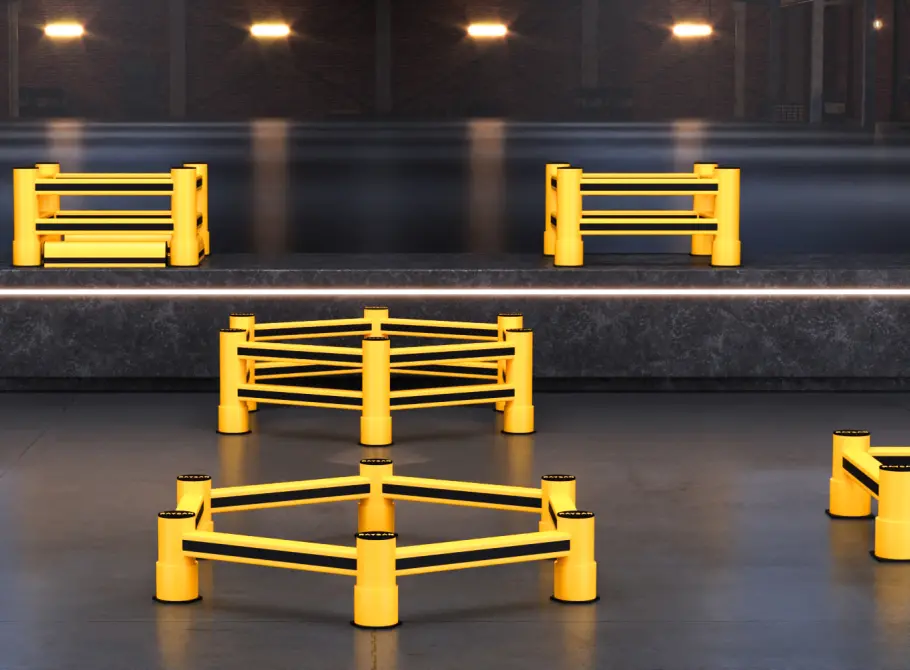
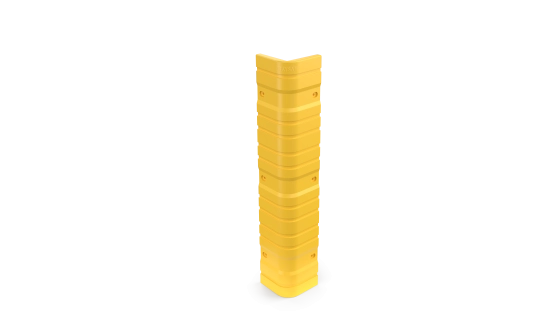
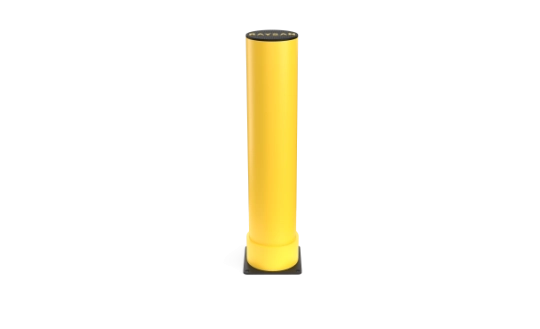
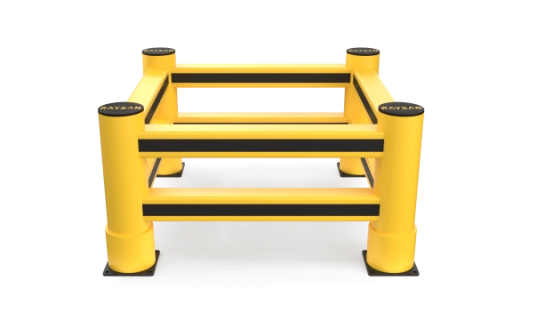
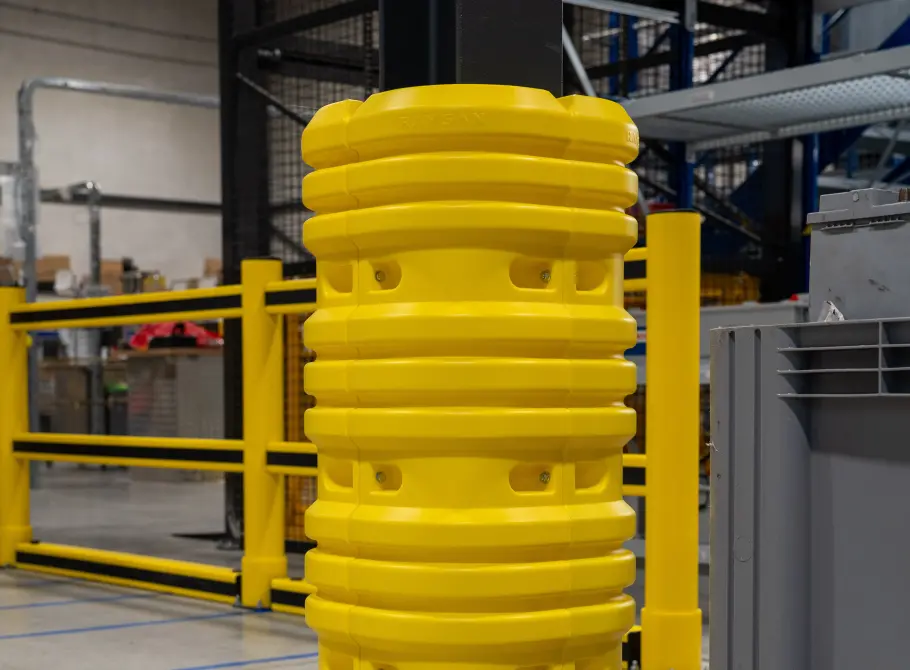
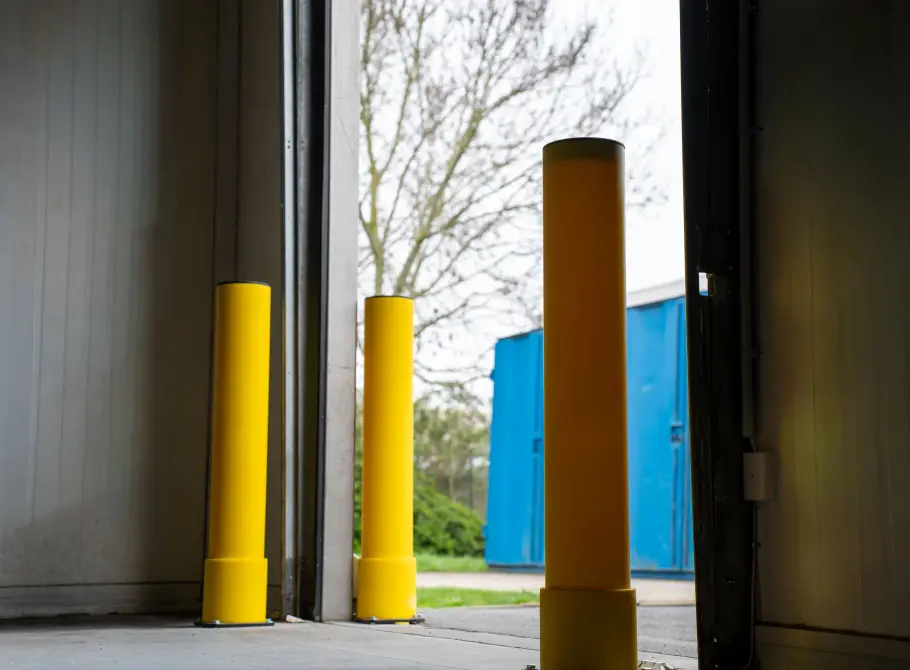
Column and corner protectors can be used to protect columns, pillars and corners. These flexible systems are designed to absorb impacts and help protect vulnerable infrastructure. For larger columns and pillars, we also offer PolyGuard column protection.

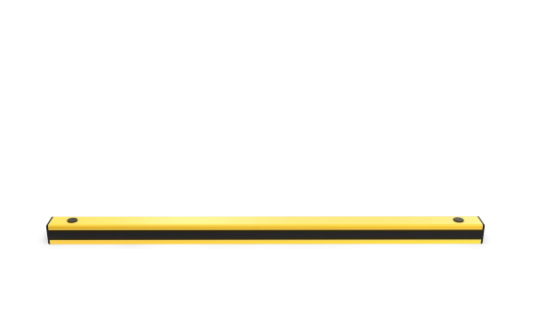
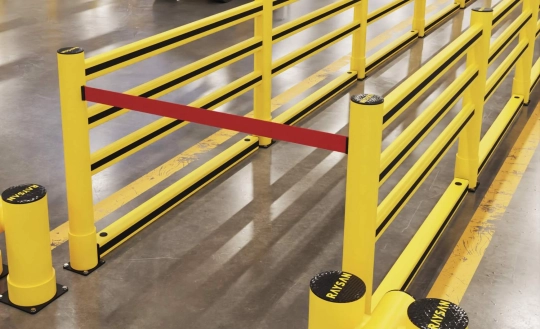
For longer walls, machine areas or infrastructure lines, a safety barrier may be more suitable. In areas with low clearances, height restrictors can help reduce the risk of impact before vehicles reach the vulnerable structure.

The most suitable solution therefore depends not only on the part of the building that needs protection, but also on the direction of traffic, the available space and the potential impact.

How do we determine which building protection is needed?

A freestanding column requires a different approach than a gate, wall or loading dock. That is why we first assess how internal transport uses the area and from which direction a collision could occur.

We then determine which type of protection is most appropriate. Our solutions include both plastic and steel impact protection. Plastic protection is flexible and absorbs part of the impact. Steel, on the other hand, provides a strong, fixed barrier that robustly protects vulnerable areas. The most suitable solution depends on the application, traffic situation and warehouse environment.

In addition to providing advice, we also take care of delivery and installation. This allows the positioning and installation method to be tailored to the situation identified during the assessment.

How do we determine which building protection is needed?
Which regulations apply to building and traffic safety?

Which regulations apply to building and traffic safety?

For the protection of building structures against accidental impact, EN 1991-1-7, Eurocode 1 – Actions on structures – Part 1-7: Accidental actions is relevant. This standard covers, among other things, vehicle impacts as accidental actions on buildings and structures.

The Eurocode does not prescribe that every column, wall or gate must automatically be fitted with impact protection. It does, however, provide a framework for taking vehicle impacts into account as an accidental action on a building structure. This is particularly relevant for structural elements where damage could have structural consequences, such as load-bearing columns.

In practice, this means first identifying which parts of the building are within reach of internal transport and where a collision could cause significant damage. We help identify these risk areas and advise where targeted impact protection can help reduce the effect on the building structure.